
Maintain in mind that attacks towards cryptographic hashes only get strongerwith time, and that often algorithms that had been as soon as regarded as strong,turn into damaged. As A Result Of of this it’s necessary to incorporate a plan forupgrading the hash algorithm you employ over time. For extra info, seeLifetimes of cryptographic hash capabilities. A cryptographic hash operate is designed to compress arbitrary input into a fixed-size output while making the mapping one-way in follow. Cryptographic hash functions are employed to retailer passwords securely. When a consumer creates a password, it’s hashed earlier than being stored in a database.
Safe Communication Protocols
- Older algorithms like MD5 and SHA-1 are thought of cryptographically damaged for security functions and shouldn’t be used where collision resistance issues.
- Longer lengths, nonetheless, don’t increase safety or collision resistance and lengths shorter than 128 bit (16 bytes) will decrease it.
- BLAKE2’sdesign makes it immune to length-extension attacks, a bonus over theSHA-family of hashes.
- A cryptographic hash function is much like a checksum.
- This section maps related standards and security frameworks to the operational dangers and controls described on this guidance.
Regardless Of the bigger number SHA-3 isn’t thought of to be better than SHA-2. As A Substitute, it makes use of a considerably totally different inner construction in order that if an assault seems in opposition to SHA-2 it is unlikely to use to SHA-3. SHA-3 is considerably slower than SHA-2 so right now most users should select SHA-2.
Allow You To Verify And Securely Store Passwords
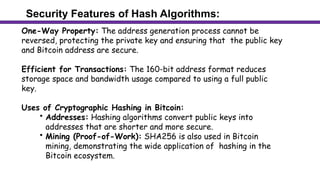
BLAKE2b is optimized for 64-bit platforms and produces an 1 to 64-bytemessage digest. For groups maintaining older systems, the principle task is often not tutorial cryptanalysis however inventory and alternative. Weak hashes linger in scripts, legacy functions, archive validation, and vendor integrations long after they are thought of unsafe. The danger is cumulative as a end result of the same digest may be reused across techniques, which turns one weak selection right into a broader publicity. Some constructions are vulnerable to size extension or associated structural attacks, which means the inner design of the hash issues, not only the digest size. Secure communication protocols, corresponding to HTTPS and TLS, use CHFs for information integrity and authentication.
Are Hash Capabilities Reversible?
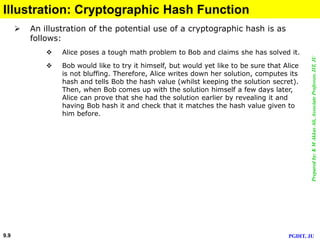
SHAKE128 is an extendable output operate (XOF) primarily based on the identical core permutations as SHA3. Longer lengths, nonetheless, don’t increase security or collision resistance and lengths shorter than 128 bit (16 bytes) will lower it. BLAKE2 is a cryptographic hash function http://4dw.net/deathdragon/conversations.php laid out in RFC 7693. BLAKE2’s design makes it immune to length-extension attacks, a bonus over the SHA-family of hashes. SHAKE256 is an extendable output perform (XOF) primarily based on the same corepermutations as SHA3.
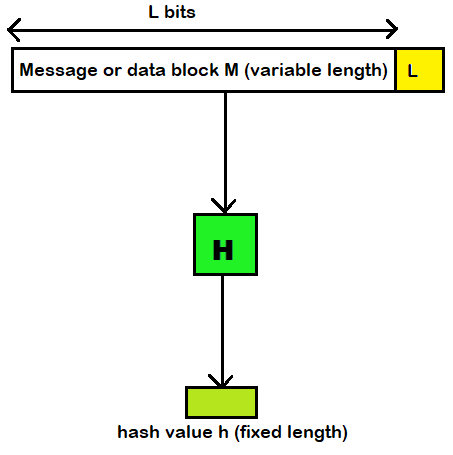
A cryptographic hash operate must be pre-image resistant—that is, given a hash perform and a selected hash, it should be infeasible to find any inputs that generate that particular hash. Digital signatures make use of CHFs to confirm the authenticity and integrity of a message or document. MD5 is a deprecated hash algorithm that has practical known collision assaults. Existing purposes ought to strongly think about transferring away. SHA-1 is a deprecated hash algorithm that has practical recognized collision attacks. SHA-3 is the latest NIST safe hash algorithm standard.